Start booking your One-to-One session with us! You can reach us at +1 (925) 409-7153 or can fill out our Contact Form

Start booking your One-to-One session with us! You can reach us at +1 (925) 409-7153 or can fill out our Contact Form
Qi Gong (pronounced “chee-gong”) is an ancient Chinese mind-body practice that combines gentle, flowing movements, deep breathing, meditation, and mindful awareness to support physical health, emotional well-being, mental clarity, and inner balance.
Practiced for thousands of years, Qi Gong offers a beautiful way to slow down, reconnect with yourself, and create greater harmony between the body, mind, breath, and spirit.
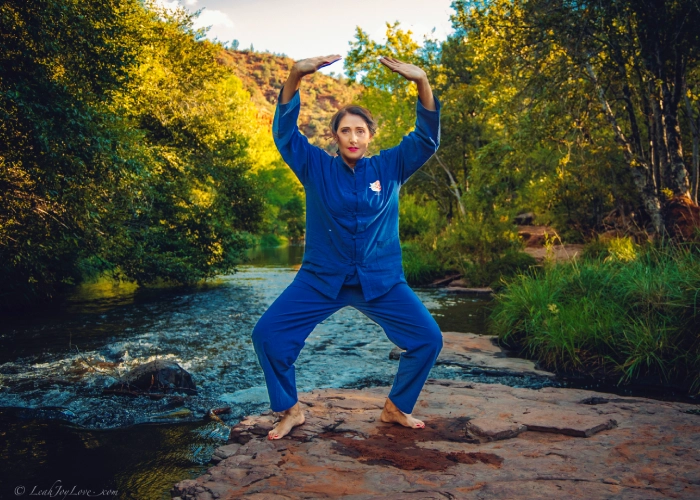

The word “Qi” (pronounced chee) refers to life energy or vital energy, while “Gong” means skill, practice, or cultivation. Together, Qi Gong means cultivating and working with your life energy through regular practice.
According to Traditional Chinese Medicine, Qi flows throughout the body through pathways called meridians. When Qi is flowing smoothly, traditional Chinese medicine associates this with greater vitality, balance, and well-being. When the flow becomes stagnant or unbalanced, it is traditionally associated with feelings such as fatigue, tension, stress, and discomfort.
Qi Gong uses slow, intentional movements, deep diaphragmatic breathing, and focused awareness to encourage relaxation, body awareness, and a sense of balanced energy.
Think of Qi Gong as a gentle combination of stretching, mindful movement, breathing exercises, meditation, and relaxation—all practiced slowly and with intention.
Because the movements are gentle, low-impact, and adaptable, Qi Gong can be practiced by people of all ages and fitness levels. You can practice standing, moving, or even adapt many exercises to a seated position

Qi Gong supports the whole person—body, mind, emotions, and spirit. With consistent practice, people may experience a variety of benefits.
Physical Benefits
Our physical and emotional well-being are closely connected. When we experience ongoing stress, worry, or emotional overwhelm, we may also feel it physically through tension, fatigue, restlessness, or difficulty sleeping.
Qi Gong provides a space to pause, breathe, move, and reconnect with yourself.
It may help:
Qi Gong can be a supportive complement to professional mental-health care for people experiencing depression or other mental-health concerns. It should not replace therapy, medication, or other treatment when those are recommended.

One of the beautiful aspects of Qi Gong is learning to listen to your body.
As you slow down, you begin to notice:
Where am I holding tension?
How am I breathing?
What emotions am I carrying?
What does my body need today?
This awareness can help you develop a more compassionate relationship with yourself.
Instead of fighting your body or ignoring its signals, Qi Gong encourages you to listen, soften, breathe, and respond with awareness.
For those who connect with the spiritual side of wellness, Qi Gong can also become a pathway for deeper inner awareness.
It may help you:

In today’s fast-paced world, many of us spend our days rushing from one responsibility to another. We may take care of our families, careers, and responsibilities while forgetting to take care of ourselves.
You don’t need to be flexible. You don’t need to be athletic. You don’t need previous experience.
You simply need to be willing to slow down and give yourself a few moments of conscious movement and breath.